By: Jessica Lewis McFate, Rob Denaburg, Caitlin Forrest
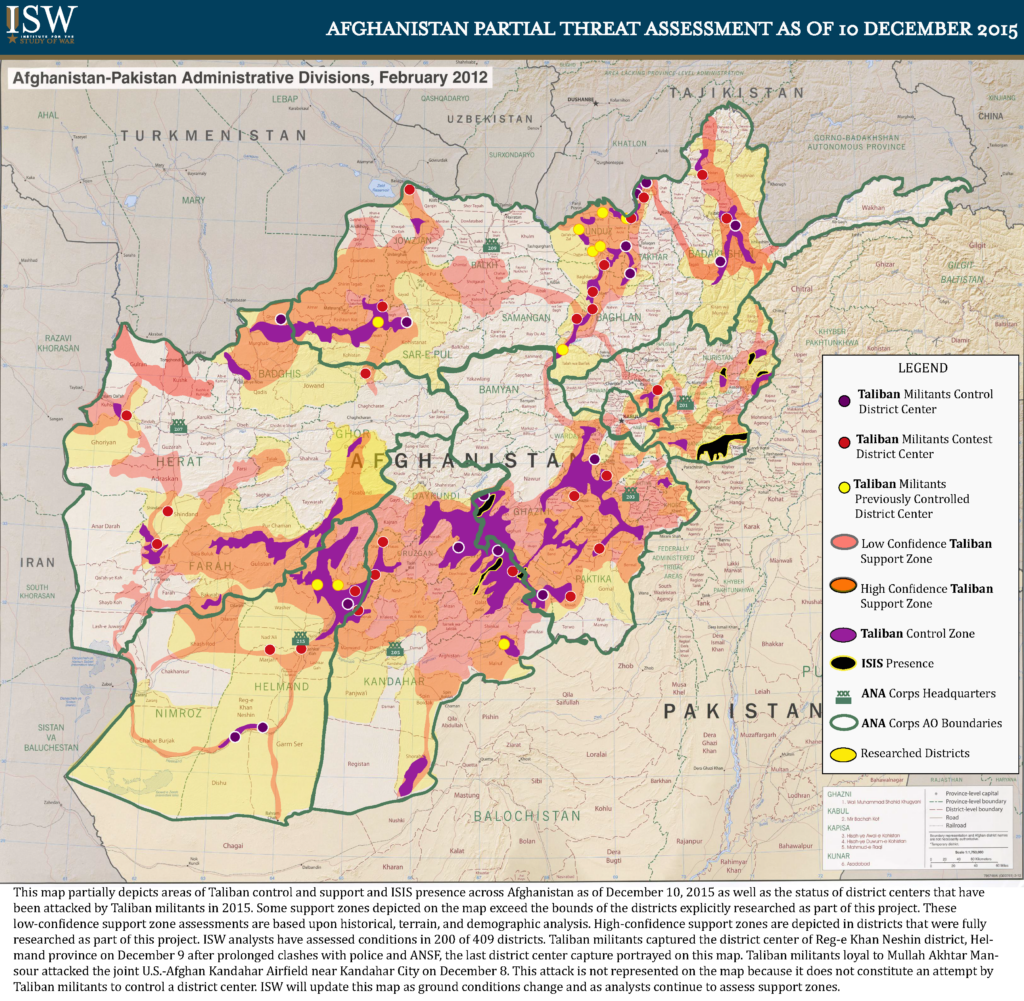
Key Takeaway: Militant forces including Taliban factions and the Islamic State’s Afghanistan-Pakistan affiliate, Wilayat Khorasan, control considerable terrain across Afghanistan as of December 2015. Militant control extends beyond historic militant sanctuaries and into numerous district centers, representing partial success at establishing governance. Taliban forces are making unprecedented gains in areas that had been cleared and held during the surge, threatening provincial capitals in northern, southern, and eastern Afghanistan. Wilayat Khorasan has also begun to exert social control in Afghanistan, specifically in Nangarhar province, but this control has not yet extended to district centers. The ANSF lack the higher headquarters and mobility functions to conduct simultaneous or sequential campaigns to counter geographically dispersed threats. NATO lacks the force structure and authority to close this gap even with the enduring presence of 9,800 U.S. troops in 2016 1. Violent competition for power among militant groups has increased, particularly as the death of Taliban founder Mullah Omar became known, and is an increasing the threat to the Afghan government. The overall threat level in Afghanistan is sharply on the rise without sufficient mitigation